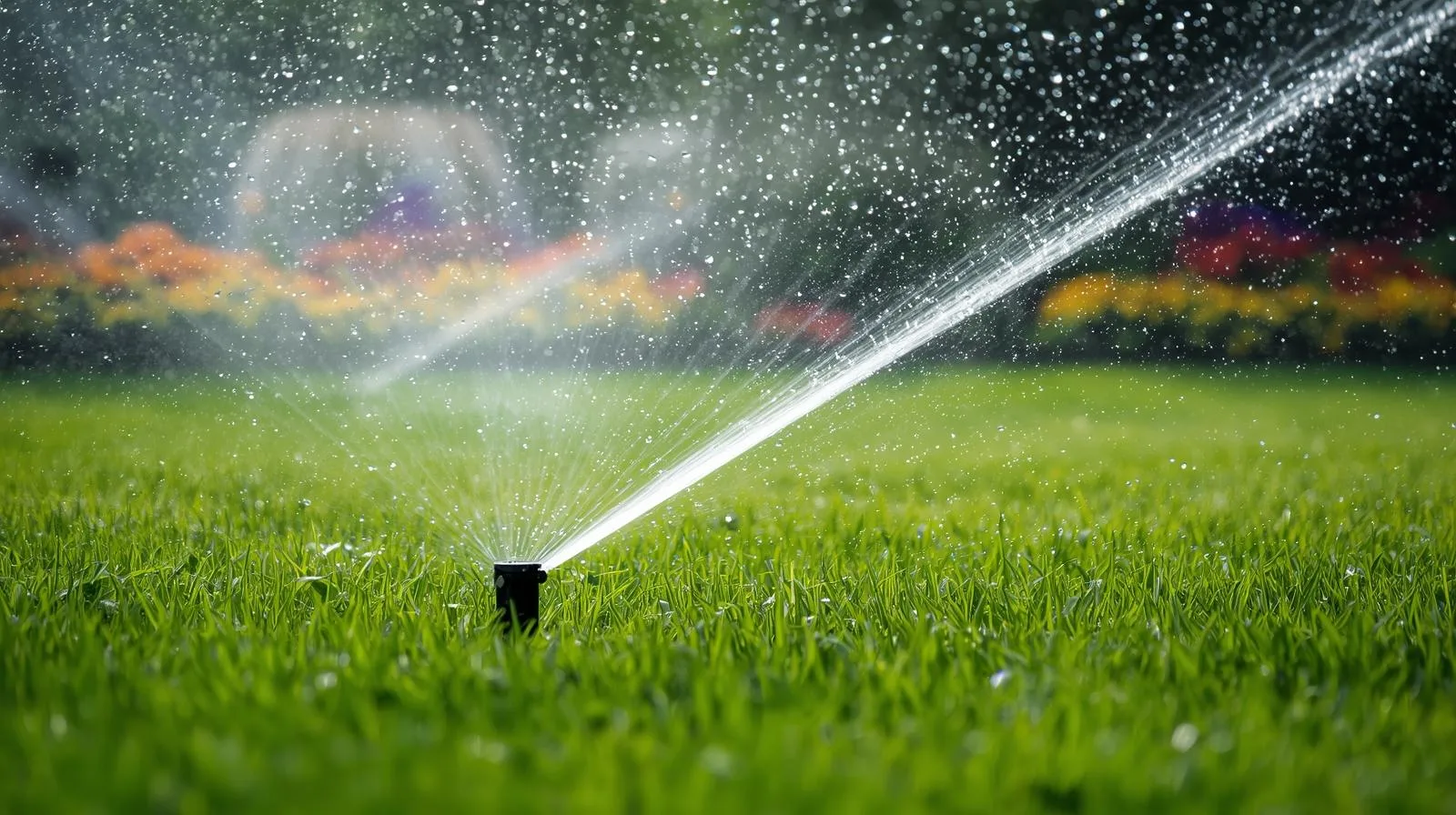
Hot summer afternoons do more than warm the air on Summit County lawns. Stone patios, south walls, and light-colored hardscape bounce heat onto the first few feet of grass while the timer still treats that strip like the middle of the yard. In Silverthorne and Dillon, the dry edge by the patio often shows up before the rest of the lawn looks tired, especially when wind dries thin soils.
Neils Lunceford sees this a lot on Summit County lots where flagstone, concrete, and garage doors sit right against the grass. Turning up every zone rarely fixes it. Start by looking at the dry edge, checking soil next to the stone, and fixing the zone that waters that strip.
This is about grass next to hot stone that still needs to look decent for guests and photos.
Why stone and open lawn fight each other
Open lawn away from walls can stay greener longer than the strip facing patio stone all afternoon. Heat off the stone dries that edge faster than the same watering schedule can keep up a few yards away. Timers set for even coverage across a rectangle miss that unless someone walks the patio edge after a cycle.
South walls and light masonry make it worse. Grass that looks fine at nine in the morning can look pale by late afternoon while the center of the lawn still feels damp a couple inches down. Homeowners who add minutes everywhere often soak sheltered corners while the patio strip stays dry. That wastes water in a dry summer and still misses the hot edge.
Breckenridge yards with wide stone seating show the same curved dry edge. The shape follows the patio, not the zone map drawn for open lawn alone.
How to read the dry edge
Walk the patio edge at dusk after a normal watering cycle and again the next afternoon before the hottest part of the day. Look for a dry strip that follows the stone, not random brown patches in the middle of the lawn. Check soil beside the patio and in open lawn the same morning. If the patio strip is dry a couple inches down while open lawn is still cool and damp, heat off the stone is part of the problem.
Watch spray during a cycle. Mist on the stone, spray that never reaches the first feet of grass, or heads blocked by furniture all starve the same strip. Water on the walk wastes time without helping the grass against the stone.
Keep dated photos from the same angle. A dry edge that returns after every warm stretch is different from one day of wilt after furniture was dragged across the same spot. Photos help when you contact us with a clear request instead of a vague note that the lawn looks bad.
Fix the patio zone before the whole timer
Do not rewrite the whole timer because one patio strip looks pale. Find the zone that waters the stone edge. Run that zone alone at dusk, watch where the water goes, then change minutes or heads for that zone only. Check soil the next day before you touch other zones.
Hand-water the patio strip once while you figure it out. If hand watering brings color back and the timer still misses the strip, aim and coverage need work before fertilizer.
Heads that actually wet the first feet of grass matter more than bumping the seasonal percent on every zone. Our irrigation work on mountain lots often starts with that patio zone, not a chart copied from lower towns. For watering tips that avoid soaking shade while hot edges stay dry, read water conservation through proper irrigation practices.
What lawn care can and cannot fix
Thin color beside patios is usually water and heat first, products second. Feeding dry grass wastes effort. Steady mowing height and sharp blades help once the edge gets enough water.
Lawn care on Summit County properties works best when the hot patio edge already gets decent coverage. Weeds that take the dry strip often follow stress. Fix water before you chase every weed. Landscape maintenance helps when furniture, edging, and beds crowd the same strip the sprinklers need to hit.
When to call Neils Lunceford
Call when the dry edge returns after you already checked soil, ran the patio zone alone, and still see weak spray or mist on stone. Call when one zone waters both open lawn and a hot patio strip and no setting works for both. Call when guests are coming and you want a real look with photos instead of another weekend of turning up the whole system.
Bring valve notes and morning versus afternoon photos of the patio edge. Mention whether furniture or bike racks sit on the grass the heads are supposed to cover. Browse about Neils Lunceford for how we coordinate irrigation and lawn work on mountain lots.
Lots against the trees in Grand County have a different mix of shade and sun. For that, read watering tips for Grand Lake lots in the trees. If several problems pile up during a busy week, the busy summer week quiz helps you choose sprinklers, lawn, maintenance, or plant care first.
Look at the dry edge, fix the patio zone so water hits the grass that bakes, then call us if that strip still dries out while the rest of the lawn holds color.
Questions about your landscape? Contact Neils Lunceford