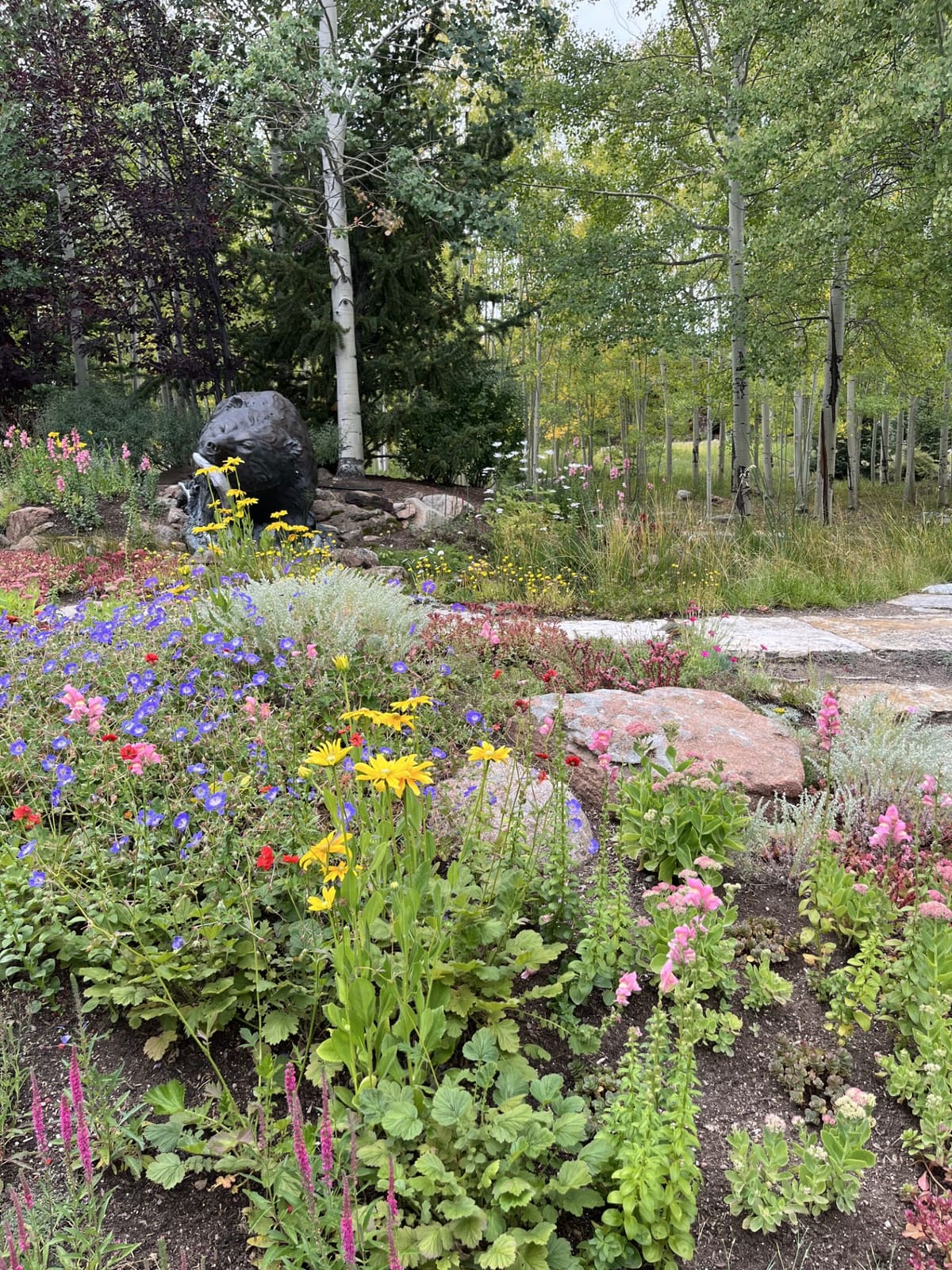
A garden-maintenance crew can notice a plant changing before anyone else. They see the bed every week or two. They remove weeds, deadhead flowers, edge beds, add mulch, prune selected growth, and watch the garden move through the short high-country season. The plant-health technician may visit less often for a more focused purpose involving insects, disease, nutrients, or environmental stress.
Neils Lunceford provides both garden maintenance and plant health care. Our plant-health team can work alongside another maintenance company or become part of a full-service Neils program. The arrangement works best when both teams see the same property history.
The maintenance crew provides the timeline
A plant-health technician may see a yellowing shrub on one day. The weekly crew may know that it looked normal two weeks earlier, that irrigation was repaired nearby, that the bed stayed wet after rain, that deer browsed it during winter, that another plant in the group changed first, that construction equipment crossed the root zone, or that the plant was pruned heavily last season.
That sequence can be more useful than one photograph taken after the problem became obvious. Ask the maintenance crew to report changes rather than diagnose them. A practical note might say that three shrubs on the west end of the entry bed developed pale new growth during the past ten days, that irrigation zone six was repaired the previous week, and that photos are attached. That gives the plant-health technician a clear starting point.
The plant-health technician should return a usable explanation
Our plant-health programs include pest monitoring, disease and nutrient care, scheduled preventive visits, and targeted treatments suited to mountain conditions. After the visit, the maintenance team should know which plants were evaluated, what was observed, what was treated, which product or method was used, where it was applied, which pruning should wait, which irrigation change is recommended, what symptom to monitor, and when another visit is expected.
A treatment note that stays only in the homeowner’s inbox does not help the crew caring for the bed next week. The explanation has to travel with the people who will see the plants again soon.
Pruning can remove evidence or improve access
A maintenance crew may naturally remove dead, discolored, or damaged growth during its normal visit. That can make diagnosis harder when plant-health service has already been requested. Before pruning a newly affected plant, photograph the whole plant and the affected leaves or branches, record the location, note how quickly it changed, and ask whether the technician wants to see it first.
The opposite can also occur. Selective pruning may improve airflow, remove damaged material, or create access for treatment when the plant-health technician recommends it. The teams need to agree on the order so routine cleanup does not erase the information the next visit needs.
Irrigation belongs in every plant-health record
We design, install, start, repair, retrofit, and winterize sprinkler and drip systems across Summit and Grand counties. Our irrigation service accounts for variable pressure, frost depth, water restrictions, lawn, beds, and smart controls. A plant-health concern should include the zone, delivery method, schedule, recent repair, clogged emitter, broken head, dry or saturated soil, and startup or shutoff dates.
A nutrient or disease treatment may not solve a problem being driven by a failed emitter or a constantly wet root zone. The technician should not have to discover the irrigation history after recommending the first treatment. Related lawn care notes belong in the same file when turf and beds share a controller or water source.
Mulch changes should be recorded
Mulch can help manage moisture and soil temperature. Too much material against a stem or trunk can create another condition. A fresh layer can also hide irrigation components, grade changes, and previous symptoms. The maintenance record should state the date installed, material, approximate depth, beds covered, and whether old mulch was removed or retained.
Our maintenance service includes mulching, fertilization, and monitoring of mountain perennials and shrubs, and those actions belong in the plant-health history.
Treatment areas should be mapped
A property may contain several groups of similar shrubs or trees. The invoice should not say only that aspens were treated. Use a map or numbered photograph that lists plant group, location, observation, service, date, and follow-up. Entry-bed pale growth, rear-patio insect activity, and driveway-tree dry stress are different problems even when the plant type looks similar from the road.
This helps the maintenance crew avoid pruning or changing the wrong plants. It also gives the next technician a reliable comparison when the property sits in Summit County or towns such as Granby and Grand Lake.
Second homes need a single decision-maker
A seasonal property may involve an owner, house manager, rental manager, garden crew, irrigation technician, plant-health technician, snow contractor, builder, and HOA. Choose one person who owns the landscape record and receives weekly observations, treatment reports, irrigation changes, photos, and approval requests.
Our maintenance service is available for year-round and seasonal residents, vacation rentals, private homes, and HOAs. The service structure may be flexible. The communication structure should not be vague.
Existing maintenance companies should receive clear boundaries
When we provide plant health while another contractor handles routine maintenance, write down who owns each task. The existing maintenance team typically covers weeding, deadheading, bed edging, routine cleanup, approved pruning, mulch, general observations, and irrigation reporting. Our plant-health team typically covers diagnosis, insect monitoring, disease evaluation, nutrient recommendations, targeted treatment, preventive programs, follow-up inspection, and treatment records. The property owner or manager retains approval, shared records, access, and contractor coordination.
The actual division can differ. The important thing is preventing both companies from assuming the other is handling a time-sensitive task. When Neils handles the full program, those boundaries still help internal crews stay aligned under services.
Construction should trigger a plant-health update
Tell both teams before patio work, driveway work, an addition, a utility trench, irrigation installation, a drainage change, wall construction, tree removal, new planting, or heavy equipment access. We also provide landscape design and construction, which can keep those updates inside one operation when we are managing the whole project. When another builder is involved, the landscape record becomes even more important.
End the season with a written handoff
Before winter, record plants treated and monitored, pruning completed and deferred, irrigation winterization, the winter watering plan, mulch condition, deer or wildlife pressure, plants needing spring review, photos, and the first recommended spring visit. The maintenance team and plant-health technician should begin next season from that record rather than from whichever symptom appears first after snowmelt.
We operate from 981 Adams Avenue in Silverthorne and 72413 US-40 in Tabernash. Call 970-468-0340 or contact us when you want garden maintenance, plant health care, or both coordinated on one mountain-property history.
Questions about your landscape? Contact Neils Lunceford