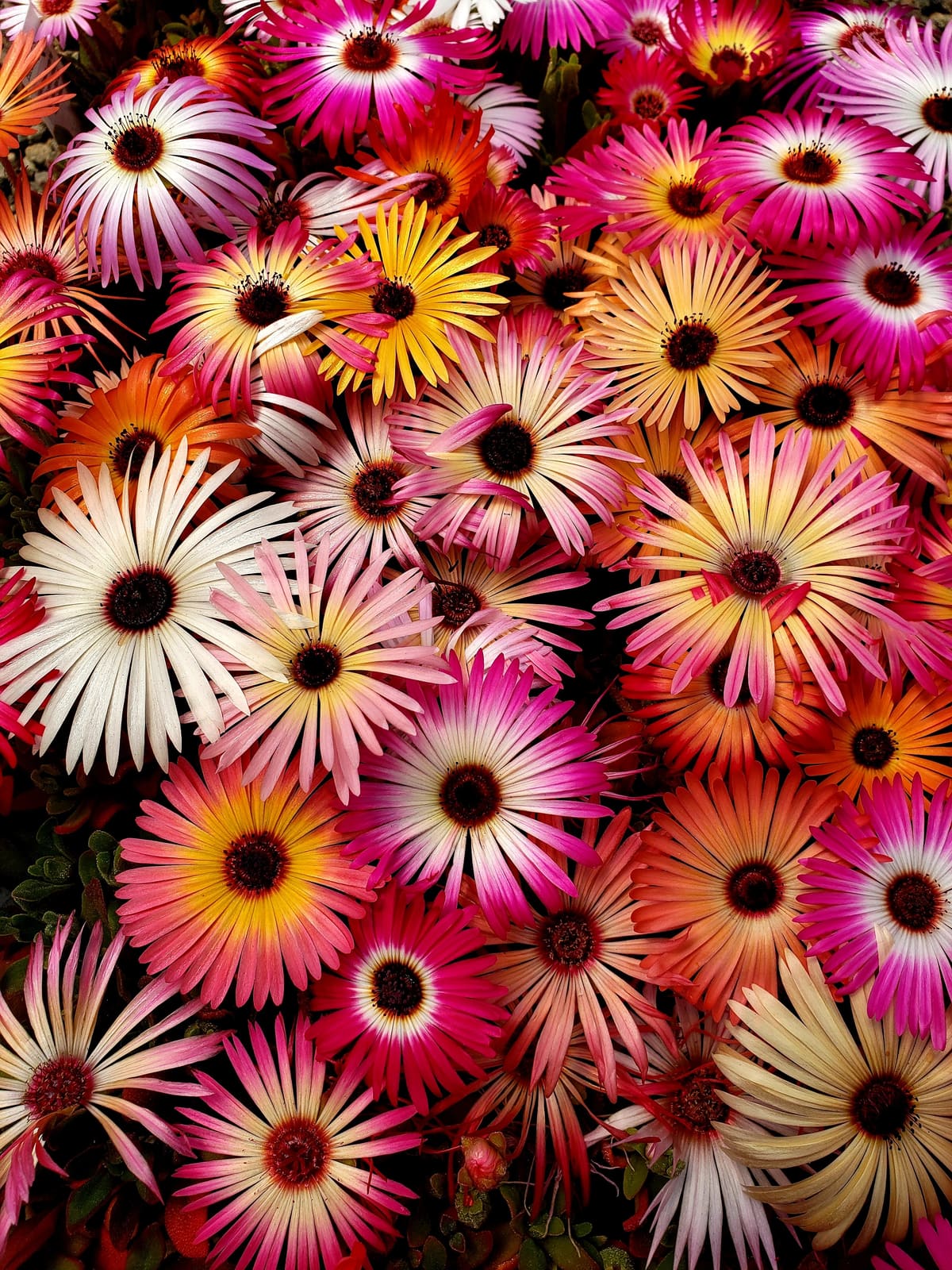
Plants are shrouded in myths, stories, and hold certain connotations. From daisies to monkshood, flowering plants hold secret meanings. We’ll describe how to plant a long-lasting perennial garden that really speaks to you.
There is a long history of lovers trading flowers to show feelings they might not be ready to actually say. Who can forget the doomed Ophelia in Shakespeare’s Hamlet, passing out flowers to the members of court? “There’s pansies, that’s for thoughts,” she says in her madness. And there are flowers that signify joy. And flowers that signify danger. So much can be expressed in silence with the bloom of flowers.
Pansy
The name “pansy” comes from the French word for “thought,” pensée. The flower is thus named because of its tendency to nod in late summer sun, making it look like it is deep in thought. The pansy is a fascinating annual that is very hardy in the cold — and one of Ophelia’s famous flowers.
Daisy
Ophelia also gives away a daisy, a flower that stands for her “purity and innocence.” In Christian legend, daisy petals represent Mary’s tears. Daisies evoke happiness and joy; a field of daisies can make anyone smile at the memories of childhood innocence. Children throughout the centuries have made daisy chains to adorn their hair. The daisy gets its name from the English “day’s eye” because the flowers open with the morning sun and close at dusk. The “Silver Princess” Shasta variety (Leucanthemum × superbum) produces cheerful white blossoms with a yellow center.
How to plant
At altitude, the perennial daisy grows beautifully. Plant in full sun to part shade and water freely. Silver Princess will grow 12 to 15” in height and should be spaced 12”. They need well-drained soil with organic material worked in. For vigorous blossoms from summer to fall, deadhead faded flowers and divide your daisies every two years. Once you have a nice bunch of daisies, they will speak to you of childhood innocence and joy.
Bachelor’s Button
The humble cornflower / bachelor’s button, Centaurea cyanus, has its place in the history of love as well. It stands for “delicacy” and “hope in solitude.” In the Middle Ages in England, it was said that a maiden who tucked a cornflower blossom under her apron could have any bachelor that she wanted — hence the name bachelor’s button.
How to plant
Plant in full sun; it’s very drought-tolerant. They do well in mixed soils in any sunny, well-drained location. They reach about 24” in height and should be spaced at least 12” apart. Bachelor’s button is usually found in blue, but you can also plant varieties in white, pink, and red. Use it for mixed borders, mass plantings, and cut-flower gardens. A vase of freshly cut bachelor’s button will bring hope to any romantic in solitude.
Daylily
The daylily (Hemerocallis) symbolizes “coquetry” because its individual flowers last for only one day. Hemerocallis is Greek for the words “day” and “beauty,” pointing to the tendency of this plant’s blossoms to appear with the sunrise and fade by sunset, only to have a new bloom appear in the same place the next morning. The daylily is the Chinese emblem for “mother.” Daylilies aren’t actually true lilies.
How to plant
The “Golden Gate” daylily reaches 3’ in height and should be planted 18 to 24” apart. This variety loves full sun, but can tolerate part shade. It requires little attention once established and is a consistent producer year after year. Find your daylilies batting their beautiful orange-yellow blossoms, flirting with all who see your talking garden.
Monkshood
Not all flowers speak of love or joy. For example, monkshood (Aconitum napellus) says, “Beware, a deadly foe is near.” Monkshood gets its name from the shape of its flower, reminiscent of the hoods worn by monks in the Middle Ages. In ancient Europe and Asia, monkshood was used to poison enemy water supplies. In ancient Greece, it was believed to have originated from the drops of saliva from the fangs of Cerberus — the three-headed dog that Hercules brought up from the Underworld. Monkshood is also closely linked with werewolf mythology, also being called wolf’s bane. This flower was said to alternatively bring on lycanthropy — making one into a werewolf — or to cure it.
Monkshood is highly poisonous — even touching it to the lips will bring on a feeling of numbness and tingling. Do not plant them where livestock are grazing, and make sure that small children, who are apt to put things in their mouths, aren’t able to access them.
How to plant
Plant monkshood in partial shade. Ordinary soil works fine; space about 48” apart. Keep moist. These tall, handsome flowers will grow to 36” and provide many coveted late-season purple-blue blossoms. Other varieties come in white, yellow, or pink. Monkshood makes a great cut flower, lasting in the vase from 7 to 10 days.
Others
Some other perennials with special meanings include: sweet William, which stands for “gallantry”; forget-me-not, symbolizing “true love, hope, and remembrance”; yarrow, the “military herb”; and delphinium, for those who are “big-hearted and fun.”
There are so many other “talking flowers.” If you’d like to know more, pick up Nugent Robinson’s Collier’s Cyclopedia of Social and Commercial Information and check out the chapter “The Language of Flowers.” The book was published in 1904 and remains a classic reference on floriography.
There is meaning and legend behind every flower you see. Browse plants at our garden nursery in Silverthorne and Tabernash, or ask about custom flower pots when you want a container arrangement with color — and a story — at your entryway. Contact us anytime for plant advice suited to Summit County and Grand County yards.
Questions about your landscape? Contact Neils Lunceford