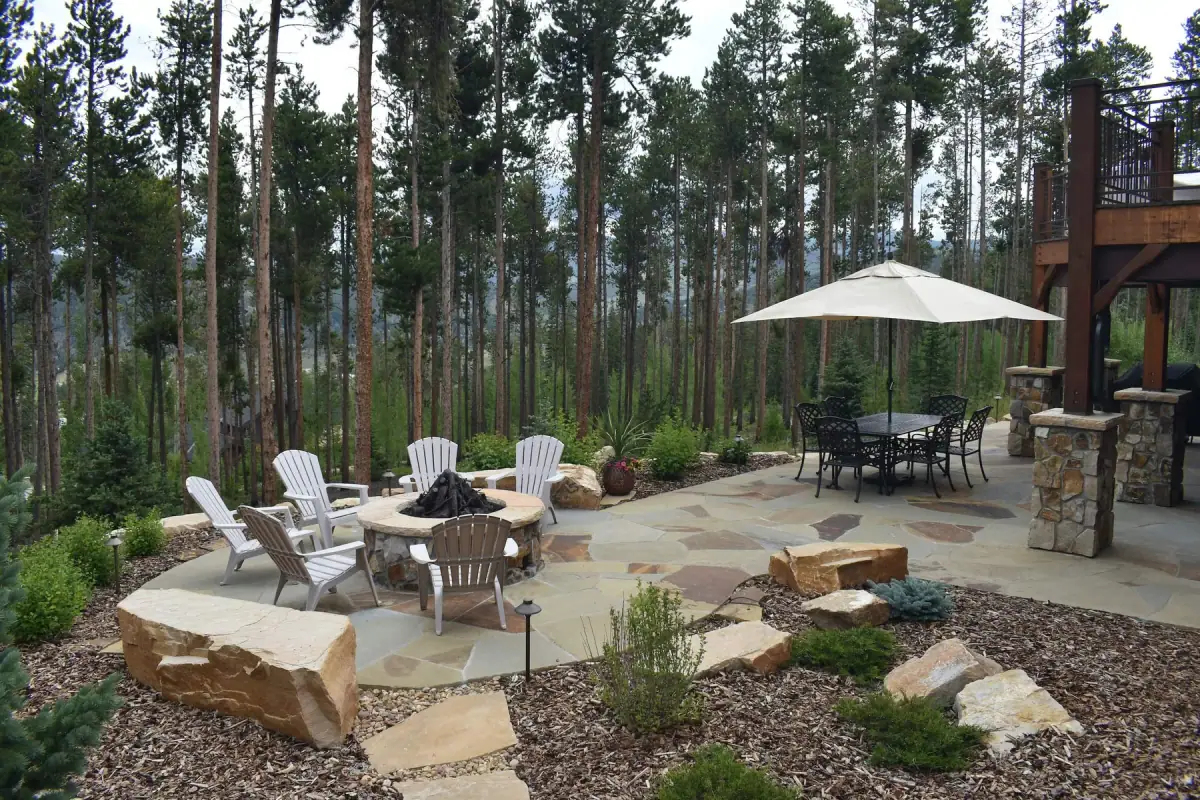
A path light that looks perfect in August can disappear under a plow berm in January. That is not a small nuisance at elevation. It is how a fixture gets snapped, how a transformer gets buried, and how a night walk to the garage turns into a guess.
Neils Lunceford designs, builds, and maintains mountain landscapes in Summit and Grand counties. We also remove snow. Lighting that we cannot reach after a storm is lighting we cannot keep working.
This is not a general lighting essay. It is about leaving a real service path on a high-country lot.
Put the transformer where a person can stand in winter
The transformer and timer do more work than any single fixture. If they sit behind a dense shrub, under a low deck, or on the downhill side of a plow pile, a burned lamp becomes a half-day search.
Walk the proposed location in boots, not from the living room window. Ask whether someone can open the cover with gloves on. Ask whether snow from the roof or the drive will sit against it. A heated garage wall, a service-side of the house, or a clear equipment pad beats a pretty hiding spot.
Write the location on the construction drawing. The next winter crew should not have to call the original installer to find the box.
Leave width around path lights, not only a visible lens
Seeing a fixture in July does not mean a technician can change a lamp in March. Path lights along a flagstone walk need room for a person, a shovel, and a short ladder if the run climbs a grade. Tight ornamental grass rings look finished until they swallow the stem.
On rental properties in Breckenridge, Keystone, and Silverthorne, guest calendars make this worse. A dark walk on a Friday arrival is an emergency call. A reachable fixture is an ordinary lamp swap on a weekday.
If you are adding lights around a new patio, keep the same access you would want for garden maintenance. Plants will grow. The service path has to survive that growth.
Do not run low voltage through the plow route
Cords and cable that cross the primary drive or the stack area get cut. We see it after the first heavy storm more often than after a lighting design review. Mark the plow path first. Then place lighting.
Our landscape design work already has to account for snow storage. Lighting belongs in that same conversation. If a bed is going to receive stacked snow, do not put the only transformer for the front walk in that bed.
Holiday displays are a separate job from landscape lighting. If you add seasonal cords, keep them off the route our snow removal crew actually uses.
Aim fixtures after the plants have a season, then recheck
A new install can look even at night and still fail once junipers fill in or aspens drop leaves onto a lens. Recheck aiming in late summer, not only on install night. Note glare into a neighbor’s window and dark gaps at stairs.
Plant health care and pruning change what a light hits. If a tree is going to be raised, wait to lock the final aim until that cut is done. If a shrub is staying, leave clearance so the fixture is not a prune-around obstacle every visit.
What to send us before we quote a refresh
Photograph the transformer with the cover closed and open. Photograph the walk at night and in daylight. Note which lamps are out, which runs flicker, and whether the problem started after a storm, a landscape project, or a rental turnover.
Leave unknowns blank. Guessing wire gauge or buried splice locations wastes the first hour.
We work from Silverthorne and Tabernash and serve Breckenridge, Frisco, Dillon, Grand Lake, and the surrounding high country. Call 970-468-0340 or contact us when a lighting run is failing and you want the access problem named, not only a new lamp list. More seasonal notes live on the blog.
Questions about your landscape? Contact Neils Lunceford