A landscape drawing made in July can look wonderfully simple.
The new planting bed curves along the driveway. Stone columns frame the entrance. A walkway connects the parking area to the front door. The patio extends a little farther into the yard.
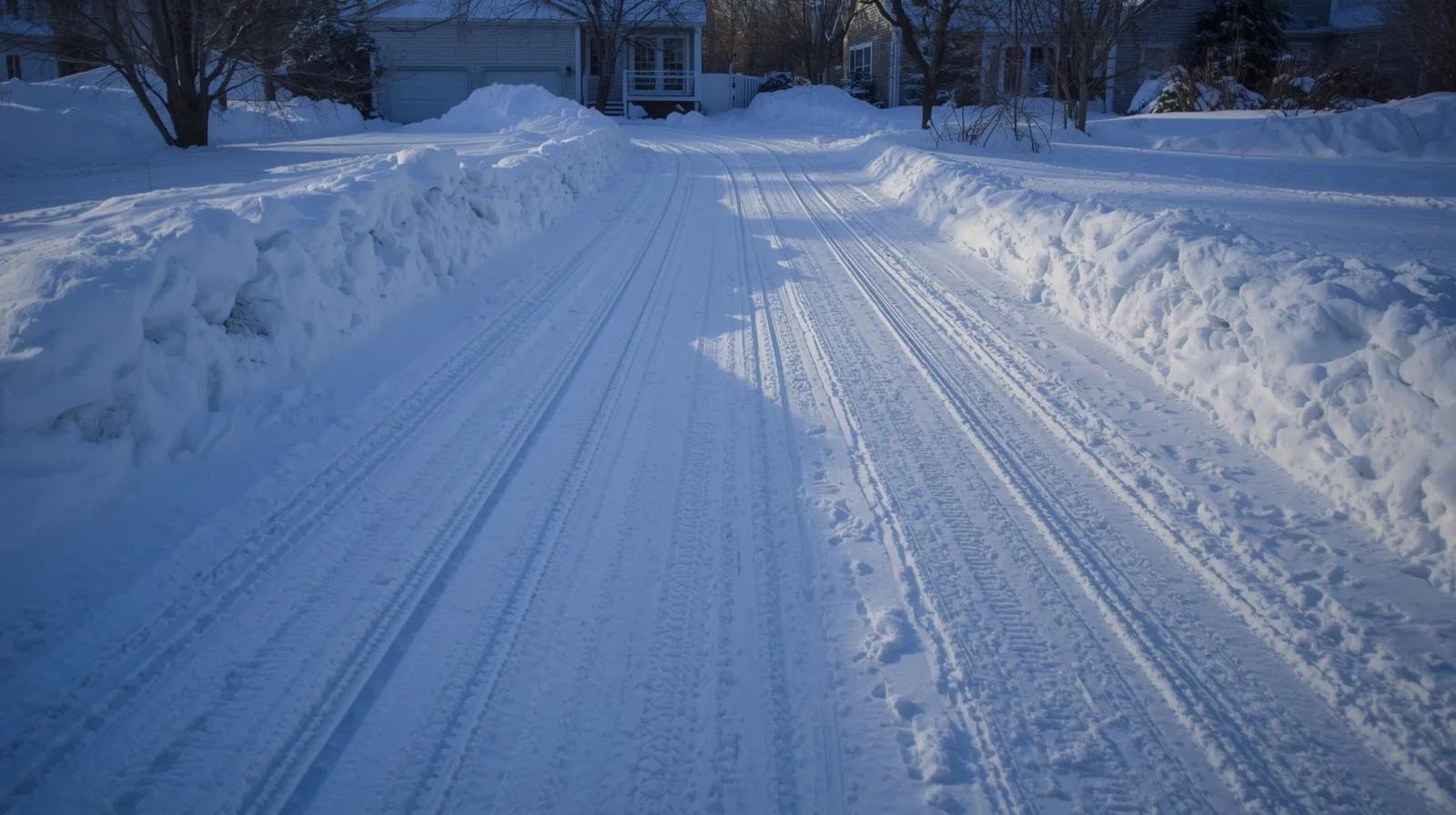
Then winter arrives, and several months of snow need somewhere to go.
Neils Lunceford is unusual in that we work on both sides of that problem. We design and build landscapes throughout Summit and Grand counties, and we also plow driveways, parking areas, and access roads during the winter. Our landscape design page specifically says mountain plans account for factors that include slope, drainage, snow, and other high-altitude conditions.
That means snow should not be treated as something to think about after the summer project is already built.
Start with the driveway because the plow needs room too
A driveway is not only a surface for vehicles.
During winter it becomes a route for plowing equipment, and every storm creates material that has to leave the driving surface.
If new planting beds, walls, decorative stones, or other features occupy every open area beside the drive, the plow operator has fewer reasonable places to move snow.
We provide regular snow removal for residential driveways, commercial lots, and access roads throughout our service area.
Before changing the landscape around a drive, think about where snow has historically been stacked.
Is that area being converted into a new planting?
Will a wall narrow the available space?
Does the new entry design create a tight corner for equipment?
A summer landscape project does not have to preserve every existing snow pile exactly as it is. The design should simply replace it with another workable plan. That planning often continues into landscape construction once the drawing is set.
Snow storage can affect plant selection
A bed beside a driveway may look perfect for ornamental plants in summer.
In winter, it may receive a large amount of plowed snow.
That changes the design conversation.
The area may stay buried longer than another bed. Heavy snow placement can physically affect plantings. Material from the drive may end up concentrated there as the pile melts.
Our design process already considers site conditions and plant material suited to the mountain environment.
The next step is being honest about what happens to that particular part of the property in winter.
A delicate ornamental feature placed directly where the plow needs to work can create frustration for both the property owner and snow crew.
A designer who knows the winter pattern can make a different choice. Examples of finished mountain work appear in the portfolio.
Walkways need to connect with the winter clearing plan
Our snow service includes hand clearing of sidewalks, steps, and entryways in addition to plowing larger surfaces.
That is relevant when a summer project adds new pedestrian routes.
A walkway may be attractive and useful during the warm season, but if it becomes a primary route to the front door, someone will need to clear it through winter.
Its width, steps, turns, walls, lighting, and relationship to the driveway can all affect how easy that is.
The same applies to a new patio or outdoor stair that becomes part of the winter access route.
Not every outdoor living space needs to remain fully open all winter. The design team simply needs to know which routes actually matter after snow begins accumulating.
Drainage does not stop being important because the water is frozen for part of the year
Snow eventually melts.
A large pile beside the driveway can send a lot of water into one area as conditions change.
Our landscape-design process includes drainage and topography as part of our site analysis.
Snow storage should be considered inside that same discussion.
Where will melting snow move?
Does the proposed wall interrupt an existing path?
Will a newly graded area send meltwater toward a walkway or building?
The exact answer depends on the property, but it is much easier to address on the drawing than after the landscape is complete. Related water management continues through irrigation services once the growing season returns.
Vacation homes make winter access especially important
We serve mountain homes, resort-adjacent properties, HOAs, and vacation rentals in communities throughout Summit County and Grand County towns such as Granby. Our snow-removal page specifically notes service for properties where the owner may be home or away.
For a second-home owner, the landscape may need to work even when nobody is present to explain it to the plow operator after a storm.
A clear snow-storage plan, sensible driveway edges, and access to the main entry become even more valuable.
If the same company is involved with both the landscape and winter service, those details can be discussed before the seasons change. The full menu sits under services.
Good mountain design has to survive more than the photograph
A finished patio in August is one moment in the life of the property.
The same site has to move through freeze and thaw, snow accumulation, spring melt, summer sun, irrigation season, and another winter afterward.
That is why we describe our mountain designs as buildable and maintainable rather than focusing only on appearance.
For a Summit or Grand County landscape project, one of the simplest questions to ask during design is also one of the most useful:
Where will the snow go?
We have served Colorado’s high country since 1980 and provide landscape design, construction, irrigation, maintenance, nursery services, and snow removal. Call 970-468-0340 or use the contact page to discuss a project in Summit or Grand County.
Questions about your landscape? Contact Neils Lunceford