A plant can look great at a garden center in the afternoon and still be the wrong plant for a mountain property.
That is one of the basic challenges of landscaping in Summit and Grand counties. The question is not only whether a tree, shrub, or perennial can grow in Colorado. It has to deal with the particular combination of elevation, cold, wind, intense sun, short growing seasons, deer pressure, and site conditions found around places such as Silverthorne, Breckenridge, Granby, Grand Lake, Dillon, and Keystone.
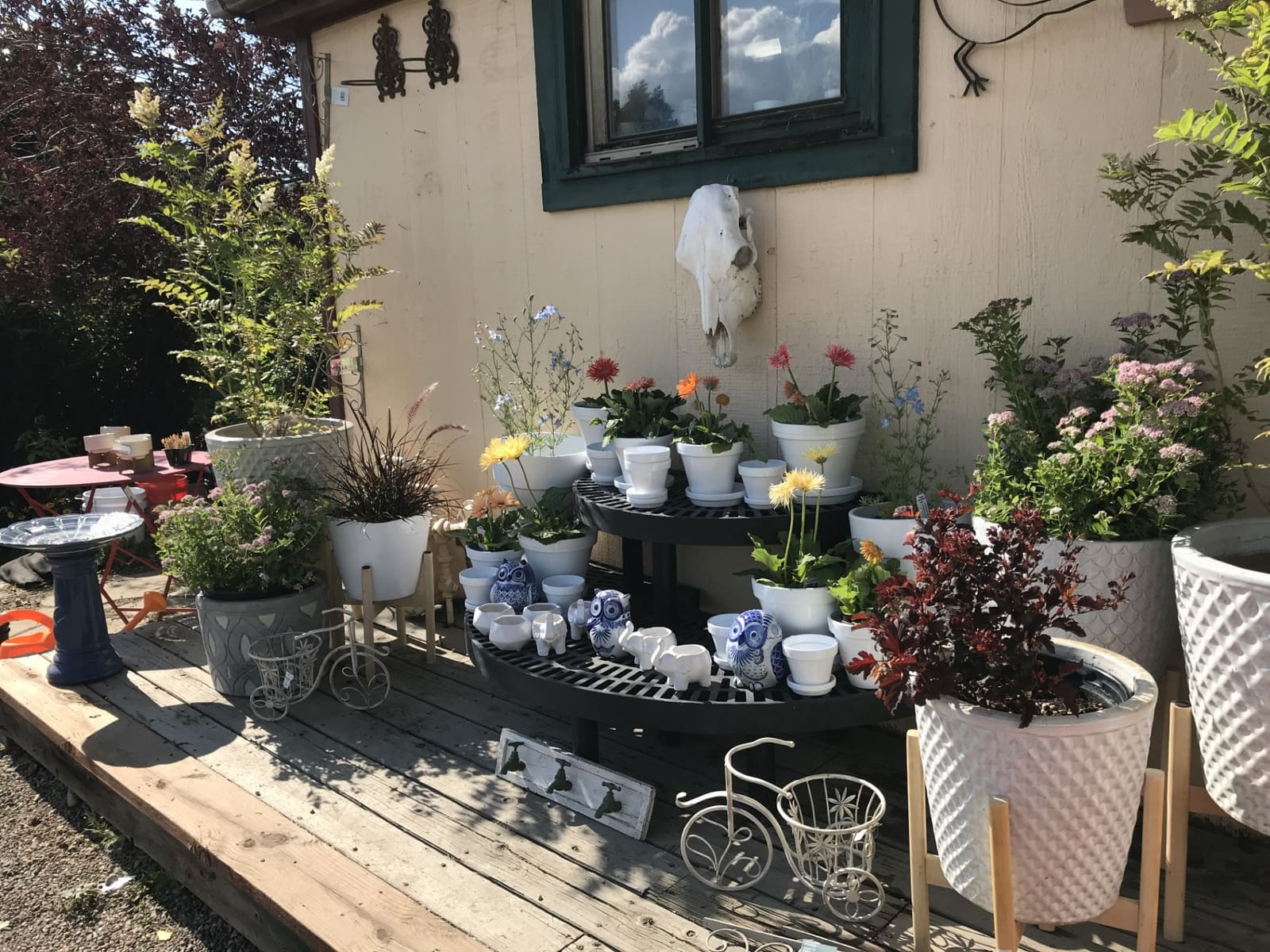
Neils Lunceford has been working in those conditions since 1980, and we operate our own garden nurseries in Silverthorne and Tabernash. Rather than treating the nursery as a separate retail business with a completely different plant palette, we stock trees, shrubs, perennials, and annuals selected for mountain conditions.
That makes the nursery useful even for homeowners who plan to do some of the planting themselves.
Start with the exact location on the property
A plant label can tell you a lot. It cannot tell you where the plant will sit at your house.
A protected bed against a building in Silverthorne is different from an exposed corner of a property where wind moves across open ground. A sunny slope and a shaded north-facing bed can exist on the same lot. A plant near an irrigated lawn may have a different moisture environment from one beside a dry rock garden.
Our landscape design process begins with site conditions such as topography, sun, soil, drainage, and views. The nursery should be approached with the same basic information.
Before buying, know roughly where the plant will go and how that area behaves.
Does it receive full afternoon sun?
Does snow sit there late into spring?
Is the area exposed to wind?
Will irrigation reach it?
Are deer routinely moving through that part of the property?
Those answers narrow the plant list far more effectively than choosing by flower color first. That same site thinking applies across Summit County and towns such as Granby.
Plants for a mountain home do not all need to be tiny and tough-looking
Choosing for high altitude does not mean giving up on variety.
Our nurseries carry trees and shrubs for structure and screening, hardy perennials, annual flowers, and plants for beds and containers. We also identify drought-tolerant and deer-resistant choices among the options our staff can help you evaluate.
A homeowner can still build a landscape with different heights, textures, flowering periods, evergreen structure, and seasonal interest.
The difference is starting from plants that have a reasonable relationship with the site.
That may mean accepting that a plant loved at a lower-elevation home is not the best choice for the new property. It may also mean discovering plants the homeowner had never considered because they are better suited to mountain conditions.
The nursery staff can help with that translation. Browse the wider services menu when the visit grows into a larger landscape project.
Deer resistance is useful, but it should not become the only design rule
We specifically offer help choosing deer-resistant options.
That is valuable in areas where browsing is a regular concern, but it is easy to build an entire plant list around one problem and forget what the landscape is supposed to look like.
A better approach is to tell the nursery where deer pressure is strongest.
The front entry may be close to regular activity and easier to monitor. The back edge of the property may receive much heavier wildlife traffic. A fenced area may allow a different plant palette altogether.
Plant selection can then respond to the way the property actually works rather than treating every square foot as equally exposed.
The same principle applies to drought tolerance. A dry slope may call for a different group of plants than an irrigated bed beside an outdoor living area.
The nursery is also useful when replacing one failed plant
Not every visit needs to begin with a complete landscape plan.
Sometimes a homeowner simply has one shrub that did not make it.
Bring information about the location.
A photograph is useful. So is knowing how much sun the bed receives and whether the plant was irrigated. If the same type of shrub has failed in that location more than once, mention that too.
The answer may not be to buy the same plant again.
Our broader business includes plant health care, irrigation, garden maintenance, and landscape design, so the conversation can move beyond “what fits in this hole?” when there is reason to think something about the site is contributing to the problem.
Sometimes replacement is straightforward. Other times the failed plant is telling you that the location needs a different choice.
We also use nursery plants in our own landscape work
The nurseries connect directly with another distinctive service we offer: custom flower pots.
We design seasonal containers for homes, patios, commercial properties, HOAs, and common areas using plants selected for mountain conditions. Arrangements can be installed and maintained through the season.
That is another example of why having a nursery inside the landscape business matters.
The design team is not choosing from a generic list and hoping the material works at elevation. The nursery and landscape operation are dealing with the same climate and communities.
For a homeowner, that creates an opportunity to see plants in person before they become part of a larger design. More communities are listed under service areas.
Visit with a location in mind
The easiest way to get more from a nursery visit is to arrive with a little property information.
Take a few photos.
Know the approximate amount of sun.
Think about irrigation.
Mention deer.
Explain whether the plant is for screening, flowers, a foundation bed, a container, or another purpose.
Then let the plant selection follow the location.
We operate our nursery and office at 981 Adams Avenue in Silverthorne and a second nursery at 72413 US-40 in Tabernash. Both locations list the same main phone number, 970-468-0340.
For Summit and Grand County homeowners, buying locally selected mountain plant material can be a much better starting point than falling in love with a plant first and trying to make the property accommodate it afterward. Related posts stay on the blog. Call or use the contact page when you want help matching a plant to a specific spot on the property.
Questions about your landscape? Contact Neils Lunceford